


.png)
Most traders understand the importance of backtesting.
They replay charts.
Test entries.
Run through dozens of trades.
But many still struggle to see meaningful improvement.
The reason is simple: they are testing without documenting what they learn.
Backtesting alone does not create progress. A backtesting journal, or trading journal, is what turns testing into real development. It captures the data, patterns, and mistakes that help traders refine strategies and make better decisions.
If your goal is consistent trading performance, journaling is one of the most important habits you can build.
.png)
A typical backtesting routine looks like this:
A trader loads historical charts, begins replaying the market, and starts taking simulated trades.
They might complete:
At the end, they check the results.
If the equity curve looks good, they assume the strategy works.
If it looks bad, they move on to a different idea.
But this process skips something critical: structured analysis.
Without documenting trades and reviewing the data, traders miss the deeper insights that explain why a strategy performs the way it does.
Questions go unanswered:
Without a journal, these answers remain unclear.
Backtesting becomes random experimentation instead of deliberate practice.
A backtesting journal transforms testing into a structured learning process.
Instead of simply watching charts and placing trades, you begin collecting objective data about your performance.
Every trade becomes a piece of information that helps you understand the market and refine your approach.
Over time, the journal reveals patterns that are impossible to see in the moment.
For example:
These insights are rarely obvious during individual trades. They only appear when you review large amounts of structured data.
A journal gives you that visibility.
Not all journals are created equal.
The goal is not simply to record whether a trade won or lost. The goal is to capture enough information to understand what conditions produced that result.
Here are the most important elements every backtesting journal should include.
Every trade happens within a broader market environment.
Capturing this context helps reveal when your strategy performs best.
Important factors include:
After reviewing many trades, patterns begin to emerge.
You might discover that your strategy works best during high liquidity periods and struggles during slow, ranging markets.
Without documenting context, these insights are easy to miss.
A journal should clearly record why a trade was taken.
This reinforces discipline and ensures that your strategy rules are actually being followed.
Document details such as:
Many traders believe they follow strict rules. A journal often reveals the opposite.
You may find that several losing trades were taken outside your strategy conditions. That insight is extremely valuable because it shows that the issue is execution, not the strategy itself.
Risk management plays a major role in long-term profitability.
Your journal should record:
These details allow you to evaluate how risk management decisions impact performance.
For example, you may discover that slightly wider stop losses significantly improve win rate without reducing overall profitability.
These types of refinements often come directly from reviewing journal data.
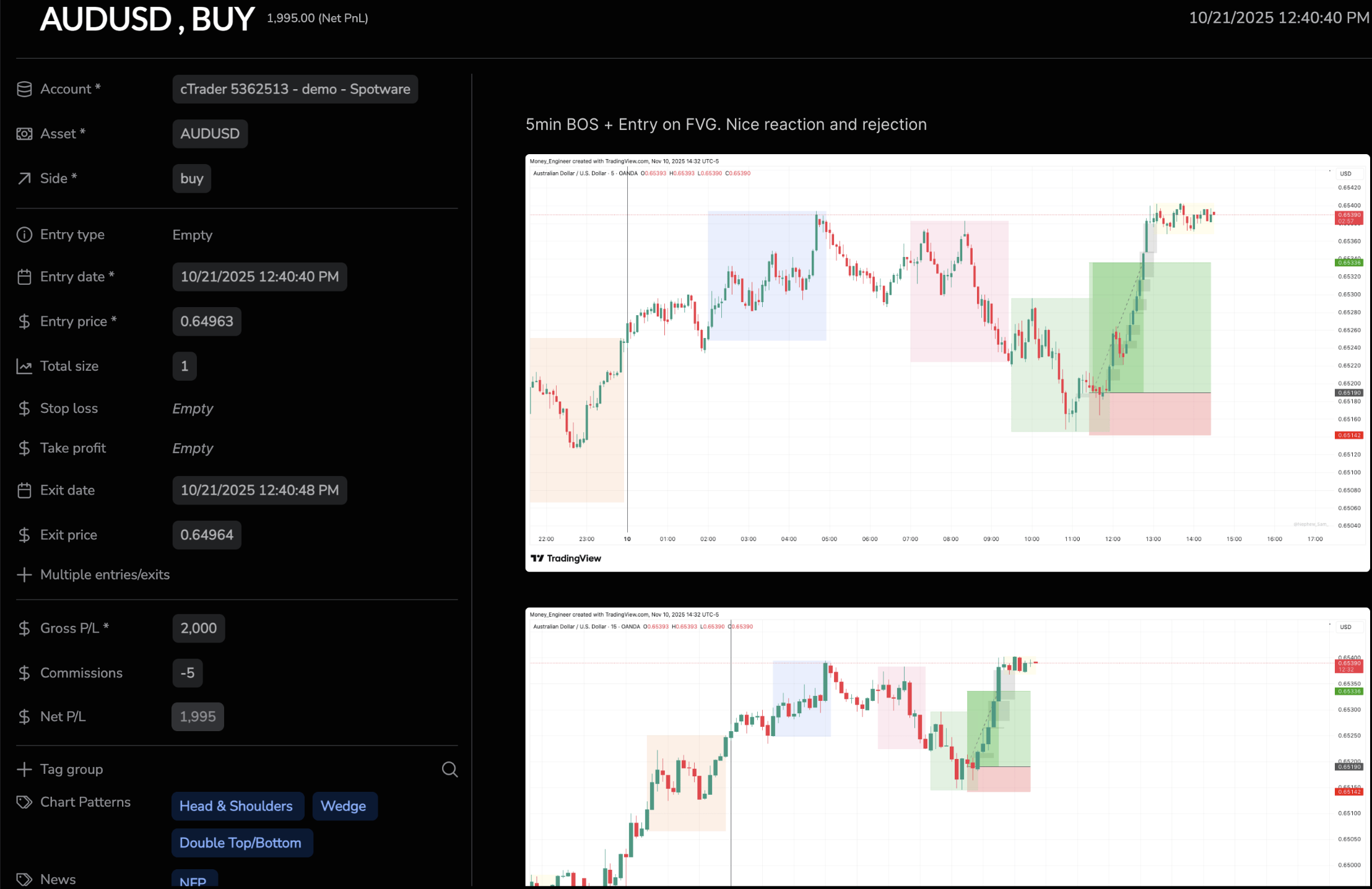
Visual records can be extremely helpful during trade review.
A screenshot captures the exact market conditions when the trade was taken.
This allows you to revisit the trade later and ask important questions:
Over time, reviewing chart screenshots builds stronger pattern recognition.
You begin to see the market with greater clarity because you have studied hundreds of real examples.
A good journal also captures observations about decision-making.
Even during backtesting, traders experience hesitation, second guessing, and rule bending.
Notes might include:
These notes help identify behavioral patterns that statistics alone cannot reveal.
Many traders discover that their biggest improvements come not from changing strategies, but from correcting execution mistakes.
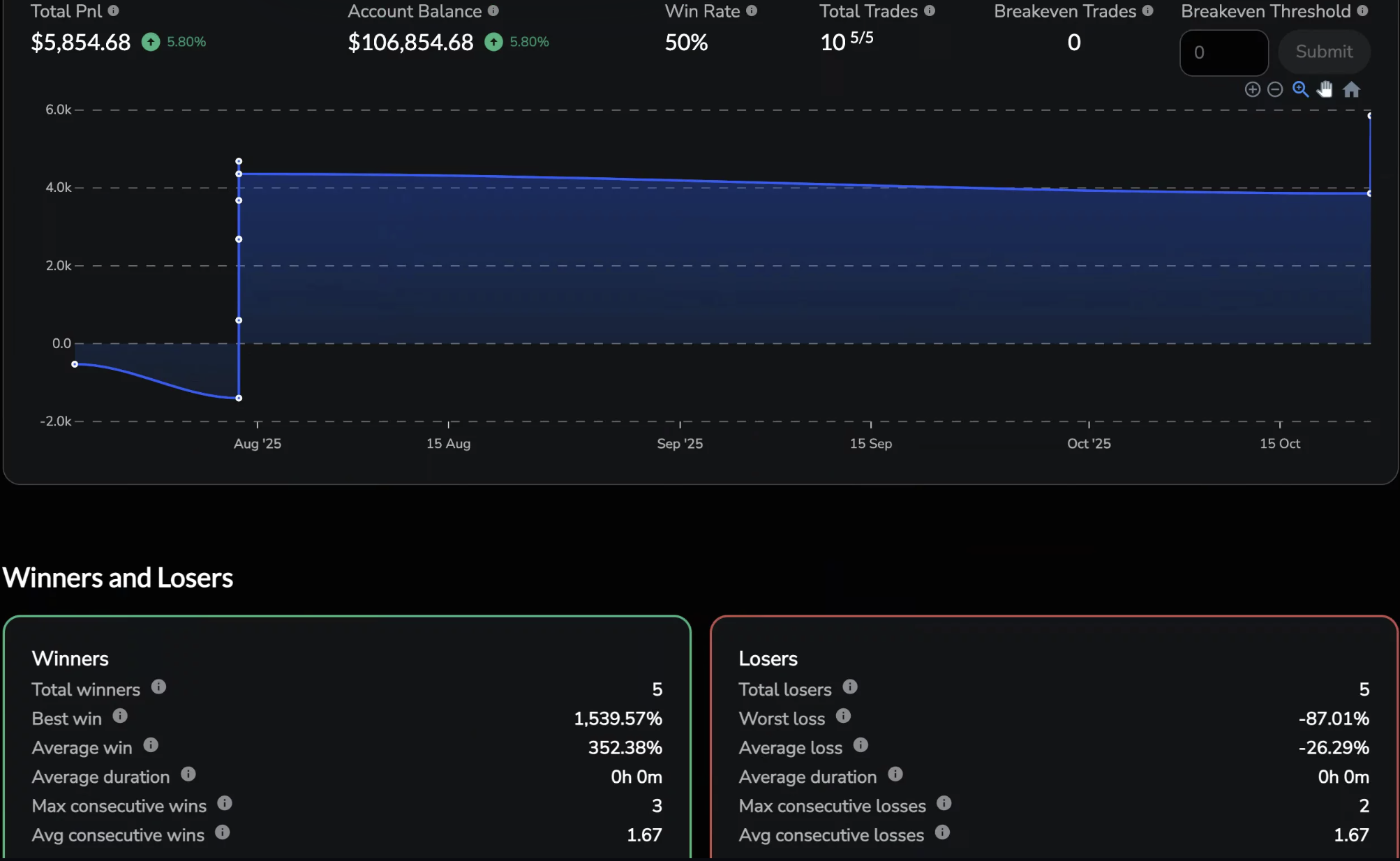
One of the biggest benefits of journaling appears when you accumulate a large number of trades.
Single trades are meaningless; even 10 trades tell you very little. But once you reach 100 or more documented trades, meaningful data begins to emerge.
Your journal can now reveal:
This data allows you to evaluate a strategy objectively.
Instead of guessing why results change, traders can analyze their data and make informed adjustments.
Many traders spend years watching charts without seeing meaningful improvement.
The difference between stagnation and growth often comes down to how practice is structured.
Random testing leads to random results.
Deliberate testing, combined with detailed journaling, produces measurable progress.
Every trade becomes an opportunity to collect data, refine decisions, and strengthen strategy rules.
Over time, this process builds confidence that cannot be achieved through guesswork alone.
Backtesting is a powerful tool, but its true value comes from structured analysis.
A backtesting journal captures the information needed to understand strategy performance, identify mistakes, and refine decision-making.
Instead of relying on memory or short-term results, traders gain a clear record of what actually works.
When combined with tools like FX Replay, journaling becomes a seamless part of the trading process.
Simulate trades, record results, analyze data, and continuously improve; that's how traders transform practice into consistent performance.
Couldn't find your question here?
Go check out our Help Center below!
A backtesting journal records every simulated trade and the conditions surrounding it. This allows traders to review patterns, identify mistakes, and understand which setups perform best. Instead of relying on memory or assumptions, decisions are based on real data.
A meaningful evaluation usually requires at least 100 trades. Smaller sample sizes can produce misleading results. Once traders collect a large dataset, they can accurately evaluate win rate, expectancy, drawdown, and overall consistency.
Journaling reveals patterns that traders cannot see during individual trades. By reviewing data, traders can identify which setups work best, which conditions cause losses, and where execution errors occur. This leads to better decision-making and more refined strategies.
Yes. Confidence comes from evidence. When traders document hundreds of backtested trades and see consistent results, they gain confidence in their strategy. This makes it easier to execute trades without hesitation in live markets.
FX Replay combines market replay, trade simulation, and journaling tools into one platform. Traders can test strategies on historical data, automatically record trades, and analyze performance metrics without manually tracking everything in spreadsheets.
.png)
.png)


