


.png)
La cryptomonnaie ne vous facilite pas la tâche.
Les marchés laissent rarement aux débutants le temps d'apprendre en toute sécurité.
Le cours du Bitcoin peut varier de plusieurs centaines de dollars en quelques minutes. Les altcoins peuvent monter en flèche ou s'effondrer sans crier gare.
La liquidité évolue rapidement. Le sentiment change encore plus vite.
Pour les nouveaux traders, cette rapidité transforme de petites erreurs d'exécution en pertes importantes.
La plupart des débutants ne perdent pas parce qu’ils sont négligents ou peu intelligents. Ils perdent parce qu’ils apprennent en temps réel avec de l’argent réel. Chaque erreur a des conséquences financières, ce qui ajoute de la pression et fausse la prise de décision.
Un simulateur de trading crypto permet d'éviter les pertes financières tout en conservant le processus décisionnel intact. Les plateformes modernes basées sur la relecture, telles que FX Replay, sont spécialement conçues pour ce type d'entraînement ciblé et de simulation réaliste du marché.
Vous avez toujours :
La différence est simple : les erreurs deviennent des enseignements plutôt que des échecs.
C'est pourquoi de nombreux traders choisissent de s'entraîner au trading sans prendre de risques avant de passer au trading réel.
La simulation ne consiste pas à fuir le risque. Il s'agit plutôt de se familiariser avec la situation avant que les conséquences ne deviennent graves.
Conseil de pro :
Si vous vous lancez dans la cryptomonnaie avec de l'argent réel dès le premier jour, vous payez le prix fort. La simulation vous permet d'apprendre d'abord, et de ne payer que si vous le souhaitez.
.png)
Un simulateur de trading de cryptomonnaies reproduit le comportement réel du marché à l'aide de données en temps réel ou historiques. Les transactions sont effectuées avec des fonds virtuels, mais les mécanismes du trading restent réalistes.
Vous apprendrez :
Mais voici ce qui importe : le réalisme varie considérablement d'une plateforme à l'autre.
Certains simulateurs ne sont guère plus que des tableaux de bord permettant de simuler des transactions sur papier. D'autres, comme FX Replay, permettent aux traders de revoir l'historique des marchés des cryptomonnaies chandelier par chandelier, de mettre en pause, de revenir en arrière, de régler la vitesse d'exécution et d'analyser les transactions directement sur le graphique.
C'est la différence entre le trading sur papier classique et la simulation réaliste de relecture qui détermine dans quelle mesure vos résultats sont réellement transposables.
Un simulateur est conçu pour :
Il n'est pas conçu pour :
Conseil de pro :
Si votre simulateur vous semble trop facile, c'est probablement qu'il n'est pas assez réaliste.
.png)
La cryptomonnaie amplifie tout.
La peur s'intensifie rapidement. La cupidité s'accélère encore plus vite.
C'est pourquoi les traders sérieux ne se contentent pas de « s'essayer aux cryptomonnaies » en conditions réelles. Ils s'entraînent d'abord.
La simulation permet une exposition répétée à :
Avec des plateformes de simulation comme FX Replay, vous n'avez pas à attendre des mois pour revivre ces événements. Vous pouvez les rejouer à l'infini et transformer des années d'expérience sur les marchés en un entraînement structuré.
C'est cette répétition qui permet d'apprendre à reconnaître des schémas.
C'est précisément pour cette raison que de nombreux traders expérimentés continuent d'utiliser quotidiennement des simulateurs. La répétition permet d'affiner ses compétences plus rapidement que ne le ferait une expérience en conditions réelles ponctuelle. Les avantages d'un entraînement structuré et régulier sur simulateur s'accumulent au fil du temps.
Conseil de pro :
La première fois que vous assistez à une cascade de liquidations, cela ne devrait pas se faire avec de l'argent réel en jeu.
Tous les simulateurs ne sont pas conçus pour l'apprentissage. Certains sont conçus pour susciter l'intérêt.
Les traders qui comparent différentes plateformes se concentrent souvent sur les fonctionnalités apparentes plutôt que sur la profondeur de la formation.
Si votre objectif est de développer vos compétences, recherchez :
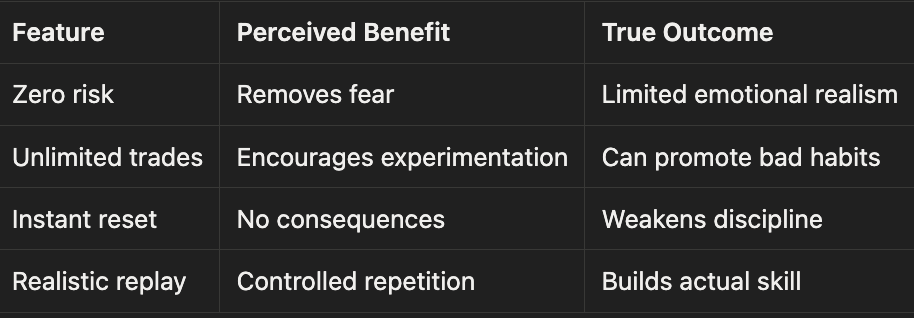
Des données fiables sont plus importantes que des tableaux de bord tape-à-l'œil.
Le marché des cryptomonnaies n'évolue pas sans heurts.
Il se stabilise, s'emballe, cale et fait demi-tour brusquement. Votre simulateur devrait reproduire ce comportement.
Conseil de pro :
Si le flux de prix semble plus régulier que les graphiques réels des cryptomonnaies, c'est que vos attentes ont été mal orientées.
La plupart des débutants utilisent mal les simulateurs.
Ils :
Cela développe de mauvais réflexes.
Au contraire, la simulation devrait être structurée.
Commencez par :
Négociez avec le même capital que celui que vous comptez utiliser en conditions réelles.
Si vous souhaitez comprendre comment les traders professionnels mènent leurs sessions de simulation, suivez une méthode rigoureuse plutôt que de procéder par tâtonnements.
Avant tout, analysez vos transactions.
De nombreux traders sous-estiment l'intérêt d'une journalisation structurée de leurs transactions. Des plateformes telles que FX Replay combinent la fonction de relecture et la journalisation, ce qui vous permet de passer en revue vos transactions directement sur le graphique, de les classer par type de configuration, de les filtrer par catégorie d'erreur et de les analyser dans leur contexte, plutôt que de vous fier uniquement à des tableurs.
C'est là que les véritables progrès commencent.
Les bénéfices générés par les simulateurs sont trompeurs.
Quelques initiatives positives peuvent susciter une confiance qui n'est pas étayée par la constance.
Au lieu de vous concentrer sur le profit, demandez-vous :
C'est pourquoi la combinaison de la relecture et du backtesting structuré permet d'avoir une vision plus claire de la qualité de la stratégie par rapport aux erreurs d'exécution.
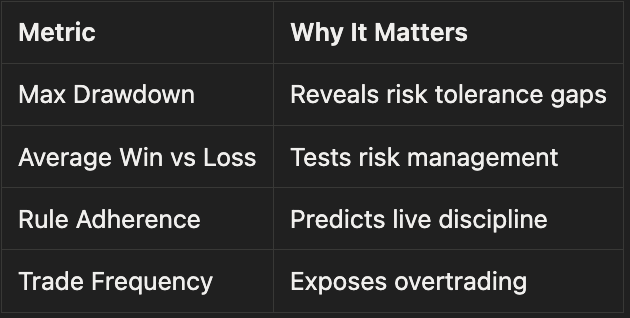
Si l'exécution n'est pas stable, les bénéfices n'ont aucune importance.
Conseil de pro :
Une courbe de capitalisation en apparence régulière, mais fondée sur des règles enfreintes, n'est qu'un désastre en puissance.
Même les traders les plus disciplinés tombent dans ces pièges :
Comme il n'y a pas vraiment de conséquence, les traders effectuent souvent beaucoup plus d'opérations qu'ils ne le feraient sur les marchés réels.
Le marché des cryptomonnaies réagit rapidement aux fluctuations du sentiment et de la liquidité. S'entraîner sans tenir compte du contexte crée des angles morts dangereux.
La simulation permet de préparer votre processus, mais elle ne renforce pas la résilience émotionnelle.
Si vous souhaitez corriger vos mauvaises habitudes de trading avant qu'elles ne vous coûtent de l'argent réel, c'est dans le cadre d'une simulation que vous devez vous y atteler.
Le passage au trading en direct ne doit jamais se faire brusquement.
Même les traders qui obtiennent de bons résultats en simulation ressentent une intensité émotionnelle accrue dès lors qu'il s'agit de capital réel. Ce changement surprend la plupart des débutants.
Voici à quoi ressemble une transition réussie :
De nombreux traders qui se préparent à des évaluations structurées ou à des environnements de type « prop » s'entraînent d'abord dans des simulations afin de mettre en place une cohérence dans leurs règles avant que les indicateurs de performance réels n'entrent en jeu.
Conseil de pro :
Si votre fréquence cardiaque grimpe en flèche lorsque vous passez en direct, réduisez la taille de votre position.
La plupart des simulateurs de cryptomonnaies intègrent des mécanismes.
Vous cliquez sur « Acheter ». Vous cliquez sur « Vendre ». Vous voyez le solde évoluer.
Ce n'est qu'une approche superficielle.
FX Replay aborde la simulation sous un angle différent.
Au lieu de réagir de manière aléatoire aux fluctuations des cours en temps réel, les traders peuvent :
Cela fait passer la simulation d'une observation passive à une pratique ciblée.
La relecture, l'exécution et la journalisation s'inscrivent dans un flux de travail unique.
Les transactions ne sont pas simplement enregistrées. Elles sont analysées dans leur contexte.
Dans un environnement crypto très volatil, cela revêt une importance cruciale. Les moindres erreurs de timing prennent alors une ampleur considérable. Les examiner directement sur le graphique, plutôt que de se contenter de regarder les chiffres des bénéfices, permet d'apporter des corrections plus rapides et plus précises.
C'est grâce à ce niveau de réalisme que la simulation par relecture est devenue un outil de formation incontournable pour de nombreux traders professionnels.
Si votre objectif est la préparation et le développement de processus, FX Replay comble les lacunes laissées par les simulateurs de marché des devises classiques.
Conseil de pro :
Si tu n'es pas capable de repasser la séquence de l'erreur et de l'expliquer clairement, tu la referas.
Les simulateurs de trading de cryptomonnaies ne servent pas à trouver les transactions gagnantes.
Il s'agit d'apprendre comment fonctionne réellement le trading.
Pour les nouveaux traders, la simulation permet :
Lorsque vous évaluez un simulateur, privilégiez le réalisme, la possibilité de rejouer les transactions et les outils d'analyse structurés. Ces fonctionnalités déterminent souvent la rapidité avec laquelle les compétences en matière de trading se développent.
Commencez par vous entraîner. Apprenez à connaître votre comportement. Ensuite, engagez-vous financièrement
Vous n'avez pas trouvé votre question ici ?
Consultez notre Centre d'aide ci-dessous !
Elles permettent aux traders de s'entraîner à acheter et à vendre des cryptomonnaies en utilisant des fonds virtuels dans des conditions de marché réelles.
Beaucoup proposent un accès gratuit avec des fonctionnalités limitées. Les outils avancés offrent souvent des analyses plus approfondies et une fonctionnalité de relecture.
Le réalisme dépend de la plateforme. Les simulateurs les plus performants s'appuient sur des données historiques réelles et une modélisation précise des processus.
Oui. Elles permettent aux traders de tester leurs stratégies dans différents contextes de marché sans encourir de risque financier.
Après avoir démontré une exécution cohérente, une gestion maîtrisée des risques et le respect des règles lors de la simulation.
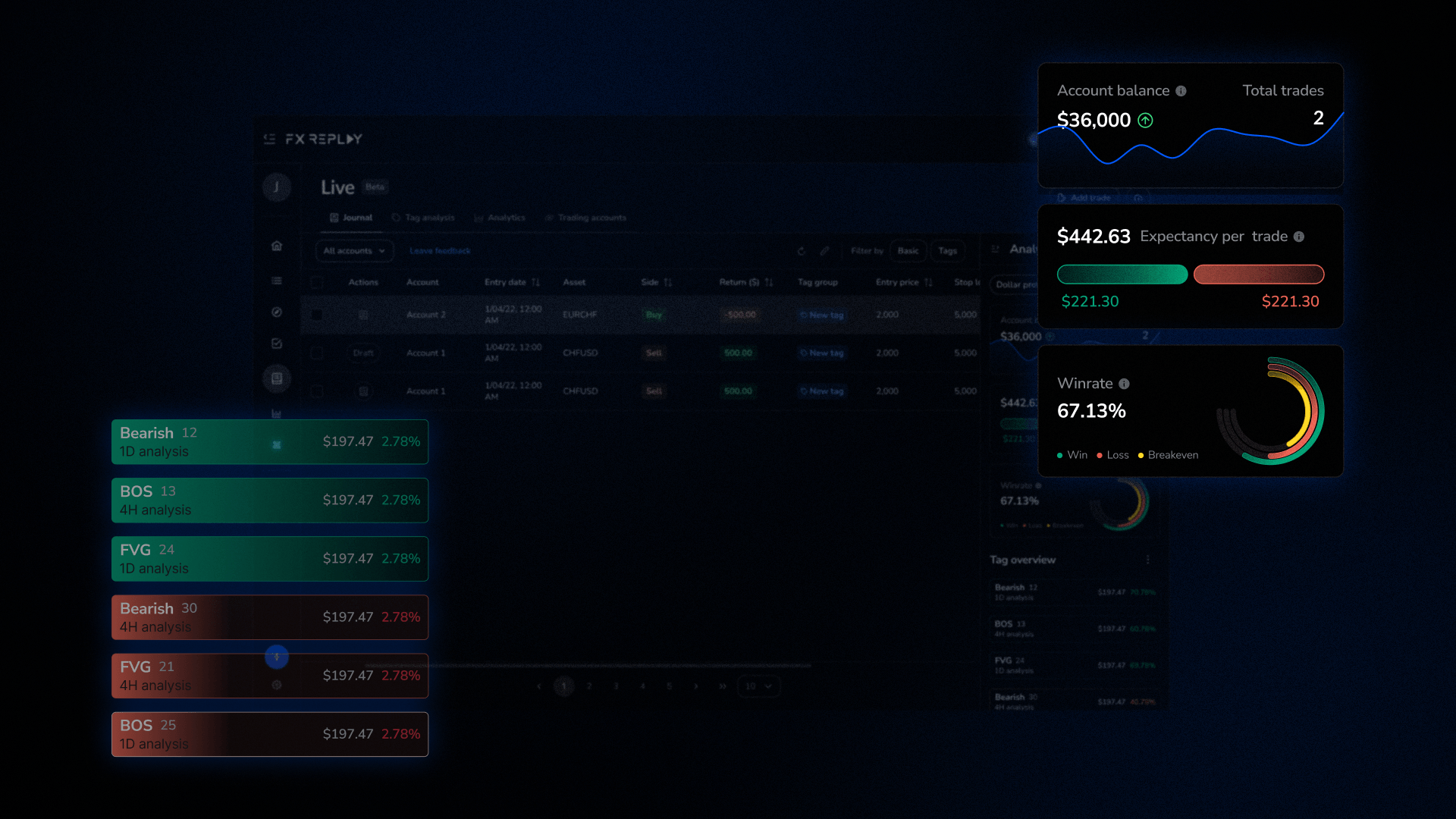
Faites de votre journal de trading un véritable atout. Apprenez à analyser vos transactions, à identifier des tendances, à éliminer les erreurs et à élaborer une stratégie fondée sur les données pour obtenir des résultats constants.
.png)
Découvrez comment vous préparer à relever le défi d'une société de trading grâce au backtesting, à la gestion des risques, à la discipline et à la simulation. Utilisez FX Replay pour vous entraîner avant de passer en production.


