


.png)
La plupart des traders n'échouent pas à cause de mauvaises stratégies ; ils échouent parce qu'ils se lancent trop tôt.
Un simulateur de trading comble le fossé entre la théorie et la pratique. Il vous permet de :
Si vous souhaitez vraiment vous améliorer, commencez par un simulateur basé sur la rediffusion, comme FX Replay , où vous pouvez vous entraîner sur des données historiques réelles, chandelier par chandelier.
Un simulateur de trading reproduit les conditions réelles du marché à l'aide de capital virtuel.
La différence essentielle que la plupart des gens ne remarquent pas :
Un simulateur ne sert pas à « s'essayer au trading », mais à s'entraîner comme un professionnel.
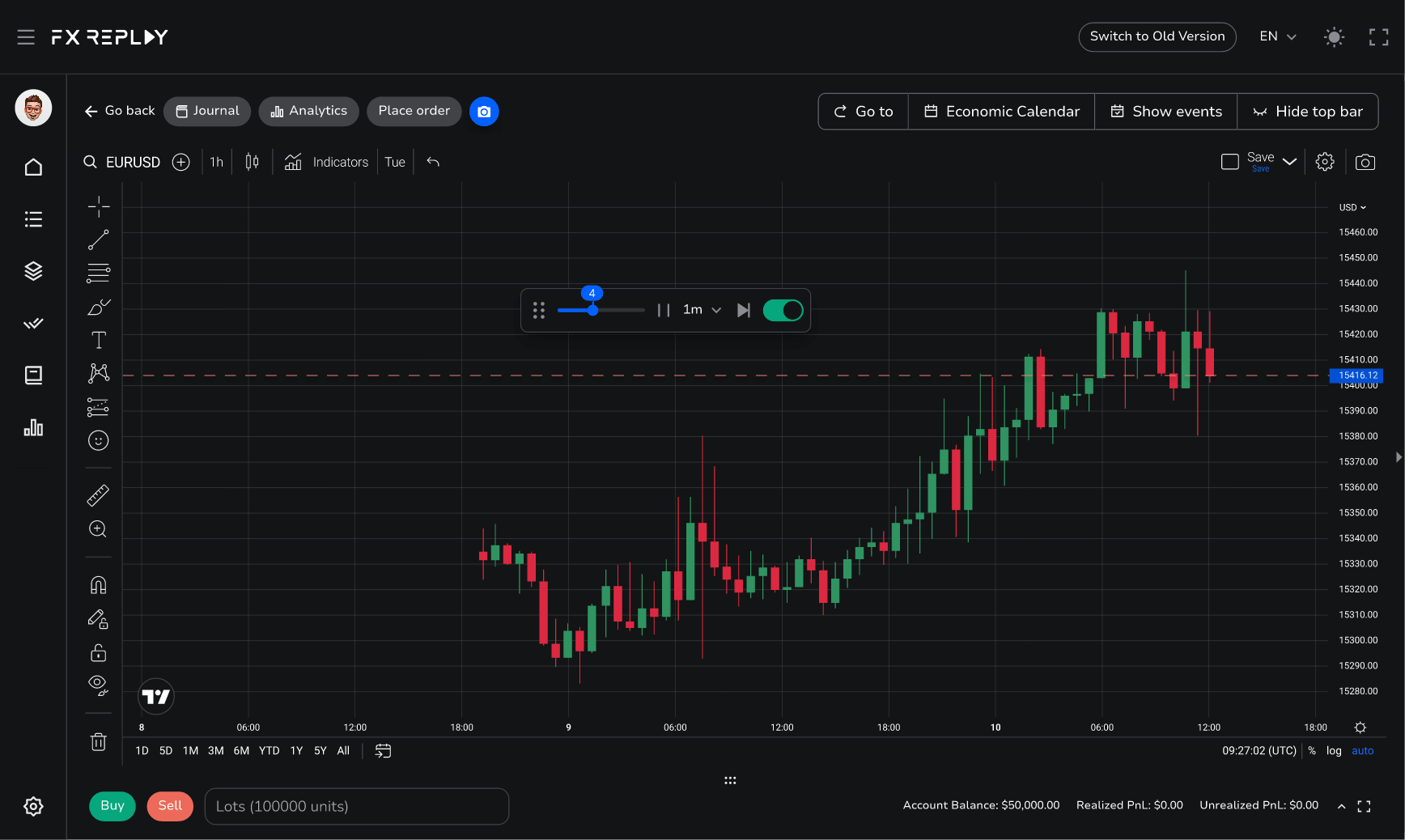
Ils traitent ça comme un jeu vidéo.
Compte : 10 000 $
Risque par transaction : 2 000 $
Stratégie : cassure aléatoire
Résultat : +150 % en une semaine (confiance trompeuse)
Cela ne s'applique pas au trading réel.
Si vous prévoyez de trader 1 000 $ en conditions réelles, simulez un capital de 1 000 $, et non de 100 000 $.
Montant du compte : 1 000 $
Risque par opération : 1 % (10 $)
:

 : 1,2000
: 1,1990
: 1,2020
Utilisez un calculateur de taille de position : https://www.myfxbook.com/forex-calculators/position-size
Entraînez-vous à cette configuration à l'aide de données historiques sur : https://www.app.fxreplay.com
Changer sans cesse de stratégie nuit à la progression.
Règle : Testez entre 50 et 100 transactions avant d'évaluer les performances.
Utilisez le mode de relecture dans FX Replay pour parcourir rapidement et efficacement les données historiques.
La plupart des débutants sont obsédés par le taux de réussite. Les professionnels, eux, se concentrent sur l'espérance mathématique. L'espérance mathématique en trading est l'un des indicateurs les plus importants pour évaluer une stratégie. Elle vous indique combien vous pouvez vous attendre à gagner (ou à perdre) par transaction sur le long terme, en fonction de vos performances passées.
Plutôt que de se concentrer sur les gains ou les pertes ponctuels, l'espérance mathématique vous donne une image plus claire de la rentabilité à long terme.
Fondamentalement, l'espérance mathématique combine votre taux de réussite avec l'ampleur de vos gains et de vos pertes :
Espérance = (Taux de gains × Gain moyen) − (Taux de pertes × Perte moyenne)
Une espérance positive signifie que votre stratégie est rentable à long terme, tandis qu'une espérance négative indique que des ajustements sont nécessaires. C'est pourquoi les traders sérieux ne cherchent pas seulement à gagner plus souvent, mais s'attachent à trouver un équilibre entre le taux de réussite, le risque et le rendement.
Taux de réussite : 50 %
Rapport risque/rendement : 1:2
Résultat de l'

:
Victoire = +2R
Défaite = -1R
Solde = Bénéfice
Si vous ne tenez pas de journal, vous avancez à tâtons.
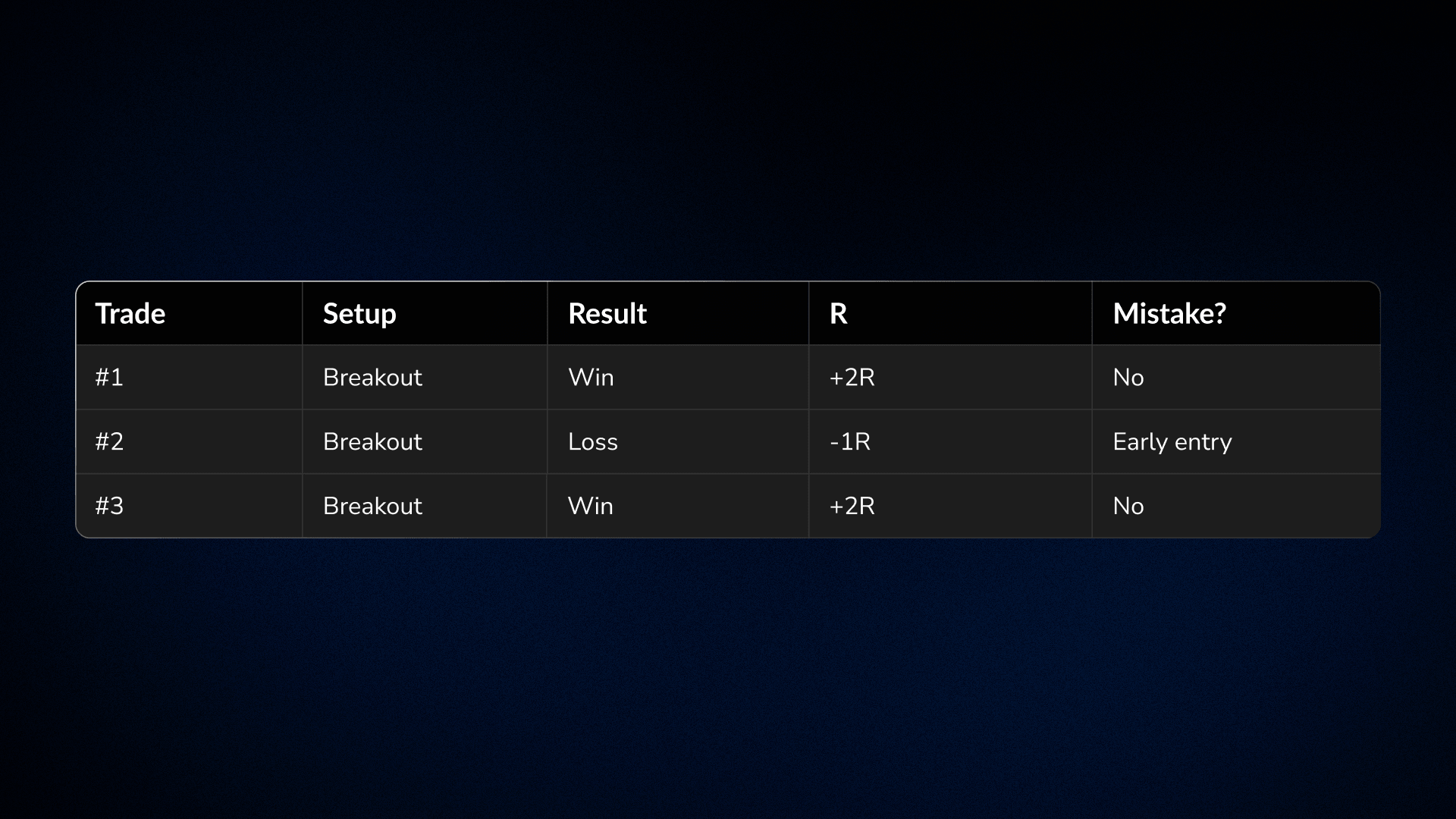
La différence entre les traders irréguliers et ceux qui ont confiance en eux est simple : les données. Le journal de FX Replay vous fournit un retour d'information immédiat sur chaque transaction, ce qui vous aide à affiner votre stratégie plus rapidement et à trader avec certitude plutôt qu'avec des doutes.
FX Replay associe la tenue d'un journal de trading au backtesting pour faciliter ce processus. Vous bénéficiez d'un accès complet au meilleur logiciel de backtesting, de la possibilité de suivre vos transactions et de synchroniser vos transactions en temps réel, ce qui vous permet d'affiner votre stratégie depuis un seul et même endroit.
Une simulation n'est convaincante que si elle donne l'impression d'être réelle.
Faites ceci :
À éviter :
Essayez de participer à une bataille chronométrée ou de créer votre propre session pour simuler la rapidité et la pression du trading en direct. C'est le meilleur moyen de vérifier si votre stratégie peut s'avérer gagnante sur n'importe quel marché.
Même sans argent réel, les émotions sont bien présentes.
.png)
En réalité, vous ne devriez pas passer en production lorsque vous vous sentez prêt, mais plutôt lorsque vous atteignez une stabilité statistique.
✔ 100+ trades completed
✔ Positive expectancy
✔ Max drawdown < 10%
✔ Strict rule adherence
✔ Emotional consistency
Stratégie de transition :
La plupart des simulateurs ne permettent pas de s'entraîner efficacement à la mise en œuvre.
FX Replay propose :
Essayez-le ici : https://app.fxreplay.com
La confiance en matière de trading vient de la pratique et de la discipline.
Un simulateur de trading vous permet de :
Les traders qui réussissent considèrent la simulation comme un entraînement structuré, et non comme un simple exercice informel. Les traders qui utilisent FX Replay dans le cadre de leur préparation structurée déclarent avoir 89 % plus confiance en leurs décisions de trading. Commencez à vous entraîner et n'entrez plus jamais sur le marché en doutant de vous-même.
Vous n'avez pas trouvé votre question ici ?
Consultez notre Centre d'aide ci-dessous !
Oui. C'est l'un des moyens les plus sûrs et les plus efficaces pour acquérir des compétences en matière de trading.
Jusqu'à ce que vous ayez effectué au moins 100 transactions avec des résultats réguliers, généralement sur une période de 1 à 3 mois.
Oui, à condition de respecter des règles bien définies, d'assurer une bonne gestion des risques et de tenir un journal de bord de manière rigoureuse.
Considérer la simulation comme un jeu plutôt que comme une formation structurée.
.png)
Cessez de perdre des heures à analyser des graphiques de manière désorganisée. Découvrez la méthode précise utilisée par les traders professionnels pour effectuer des backtests plus rapidement, identifier des avantages concurrentiels dans toutes les conditions de marché et établir une confiance statistique avant de passer au trading réel.
.png)
Découvrez comment les simulateurs de trading de cryptomonnaies aident les nouveaux traders à développer leurs compétences en matière d'exécution, leur discipline et leur confiance. Apprenez ce qu'il faut rechercher, les erreurs courantes à éviter et comment les traders sérieux ont recours à la simulation avant d'engager leur capital.


