


.png)
Trading is often described as one of the steepest learning curves in any profession. Many traders spend years repeating the same mistakes; overtrading, revenge trading, or ignoring their setups, without realizing the missing component isn’t another strategy.
It’s self-awareness.
And the fastest way to build that is through structured trade journaling.
In this guide, we’ll explain why journaling can accelerate your trading development by years, how it works, and how platforms like FX Replay can help you implement it effectively.
A trading journal is a structured system for recording and reviewing your trades. It typically includes:
A proper journal transforms trading from random execution into a data-driven improvement process.
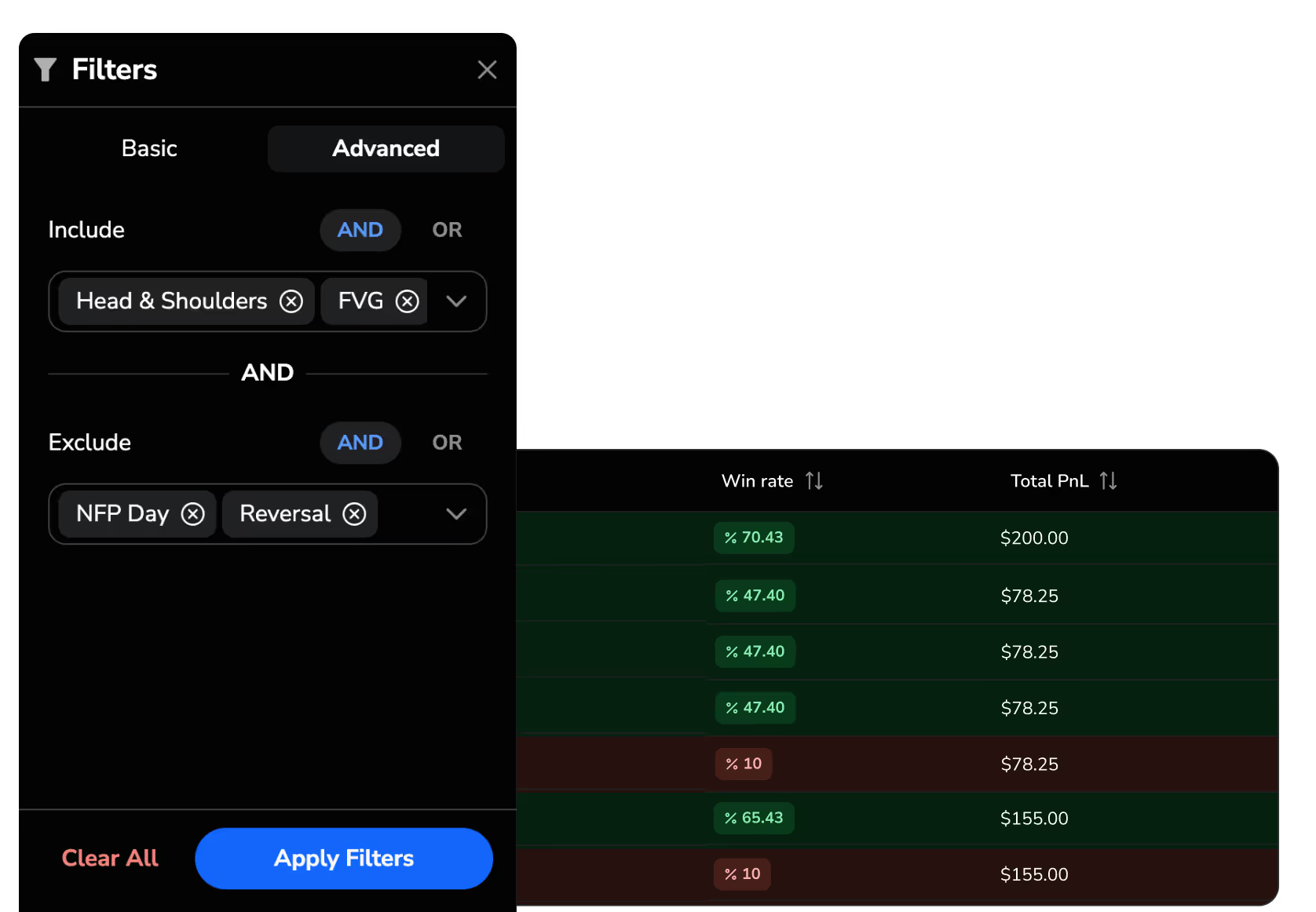
Without journaling, traders rely on memory. Memory is unreliable because it is:
This leads to false conclusions, such as blaming the strategy instead of execution, or overlooking repeated behavioral mistakes.
Consistent documentation exposes patterns that are otherwise invisible:
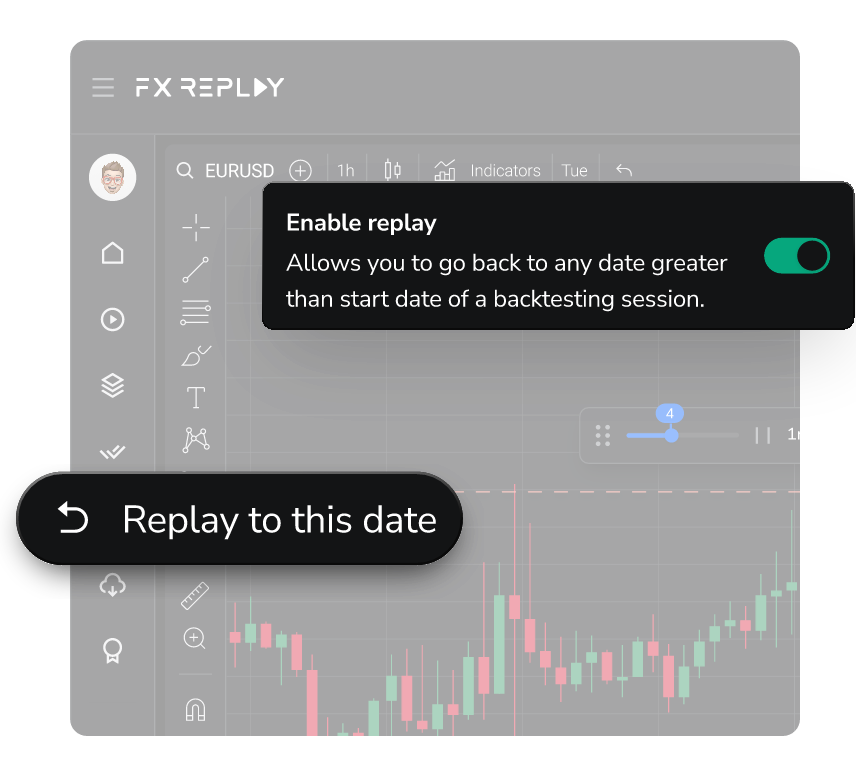
Using tools like FX Replay, traders can replay past market conditions and journal decisions in real-time, making pattern recognition significantly more precise.
The difference between slow and fast traders is not intelligence, it’s feedback.
Journaling creates a continuous improvement loop:
This drastically reduces the time required to gain experience.
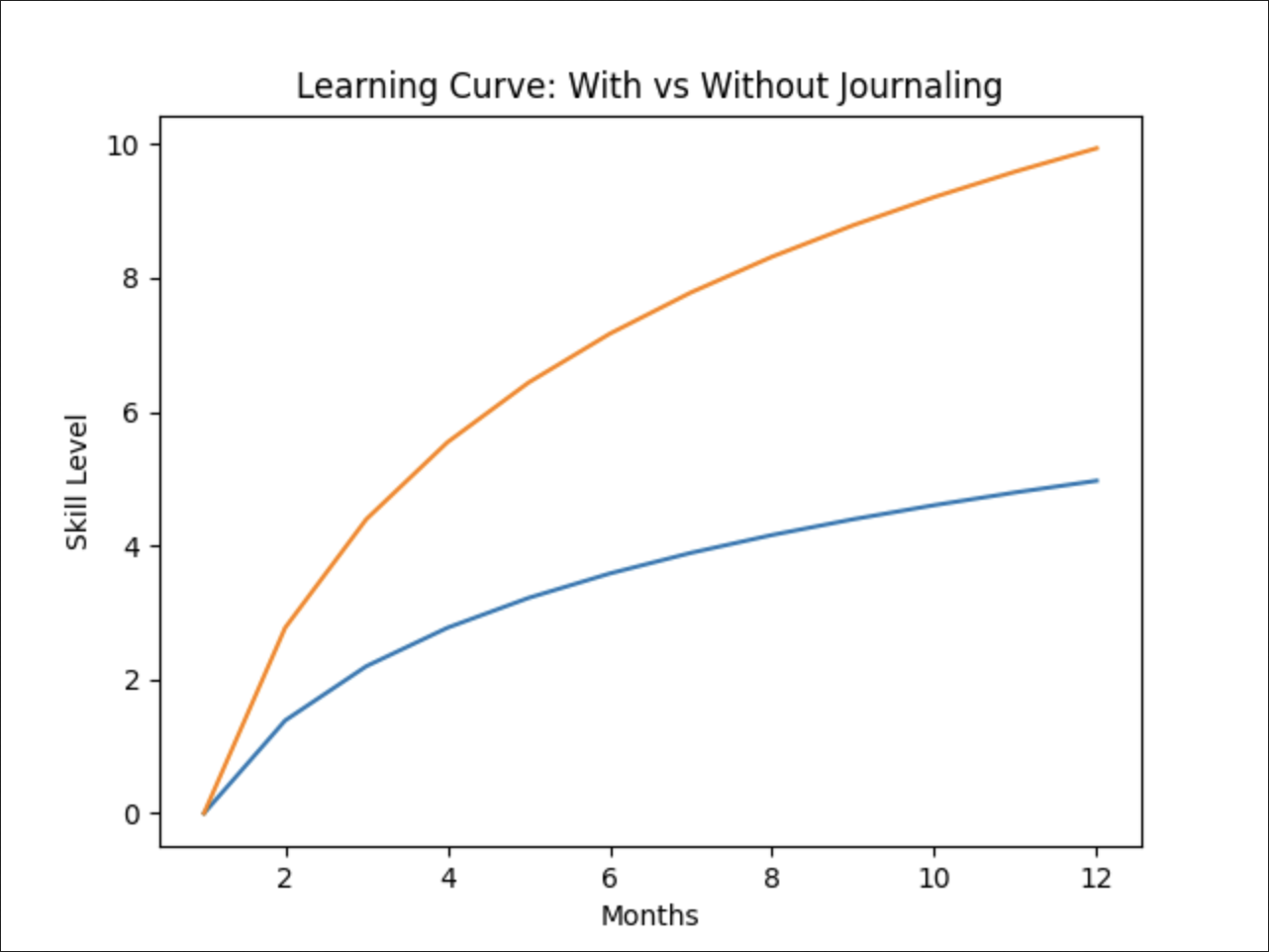
In this chart the orange line represents the skill level development of a trader who journals versus a trader who does not (in blue). This chart illustrates how traders who journal improve at a significantly faster rate than those who rely solely on screen time.
One of the most powerful benefits of journaling is mistake awareness.
When traders track their actions, they begin to identify:
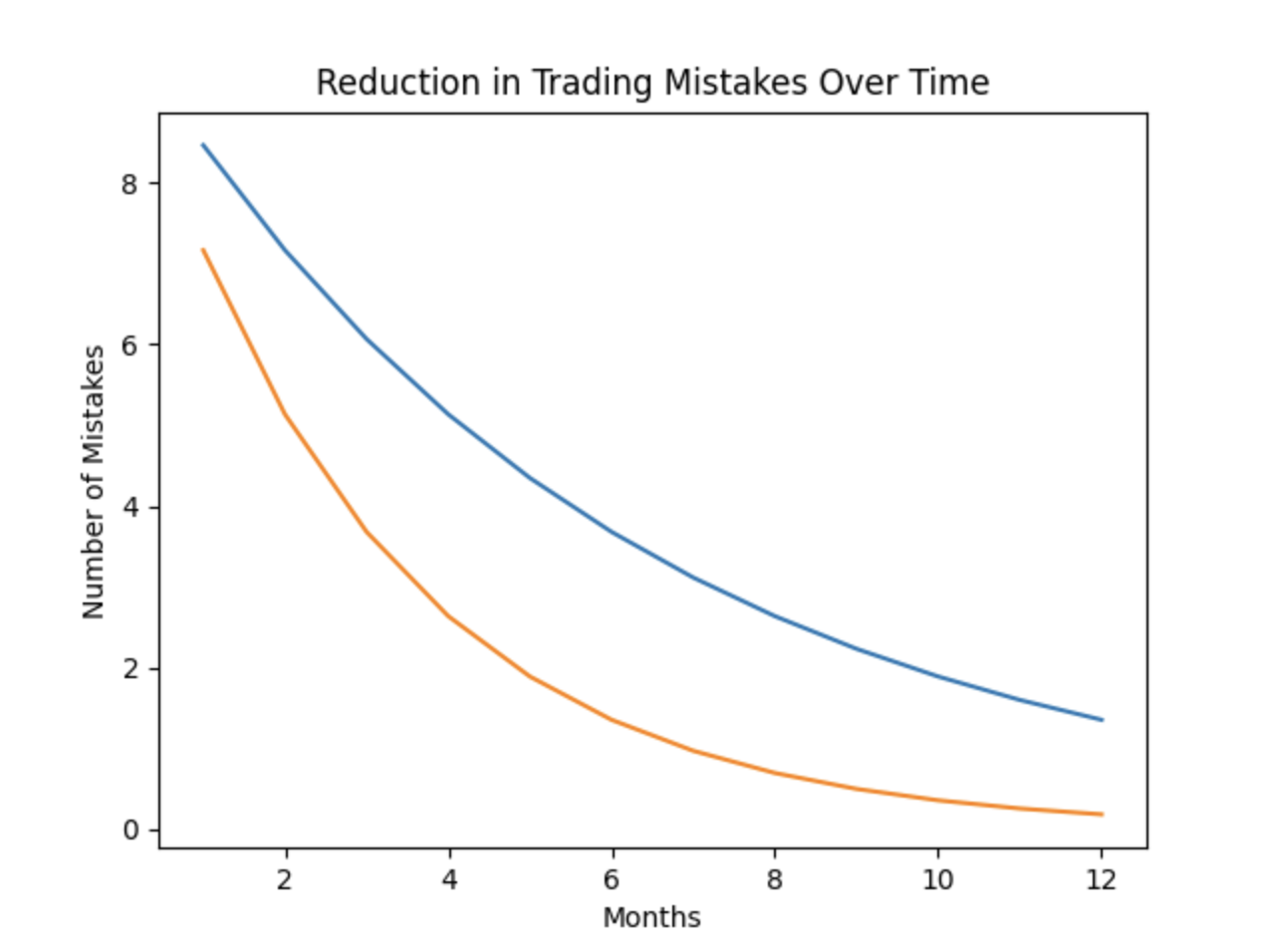
The data visualization shows how structured review (orange line) accelerates the reduction of recurring mistakes, whereas the blue line shows that without journal review, mistakes start higher and stay higher over time.
The act of journaling introduces accountability into trading.
When every decision must be recorded and reviewed:
Over time, this leads to consistency; one of the defining traits of profitable traders.
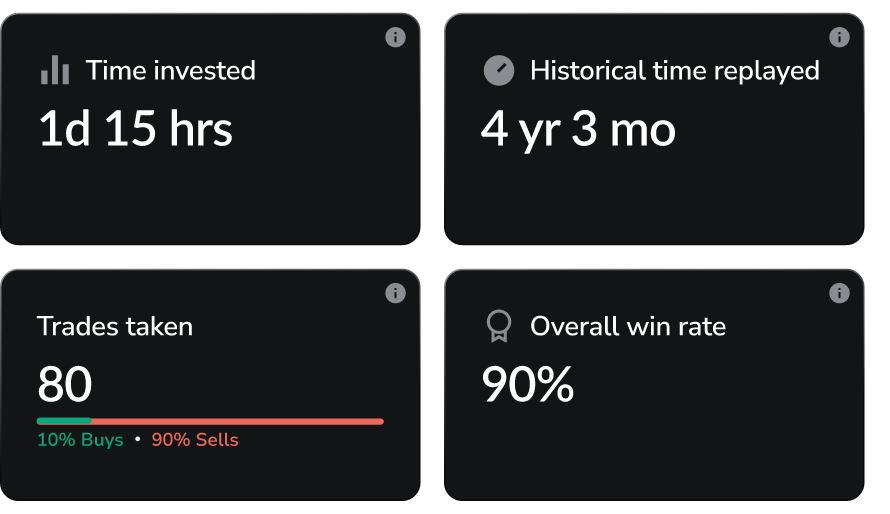
Losses are inevitable in trading. Journaling determines whether they are wasted or valuable.
Each loss can be evaluated through:
This shifts the mindset from avoidance of losses to analysis of outcomes.
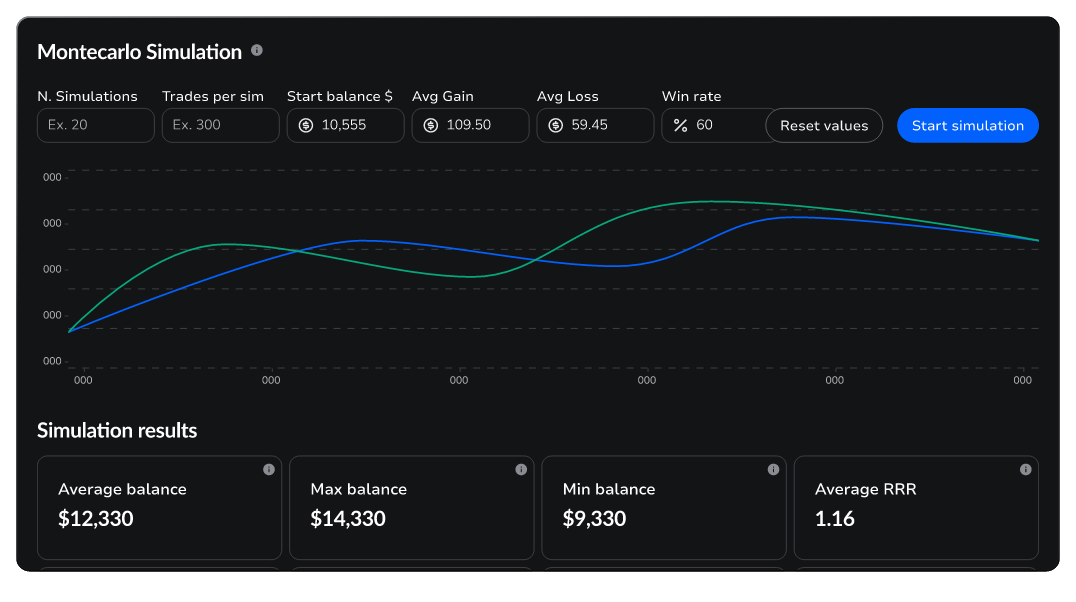
Journaling allows traders to refine and validate their strategies through:
When combined with FX Replay’s backtesting tools, traders can simulate and journal hundreds of trades efficiently, leading to faster optimization.
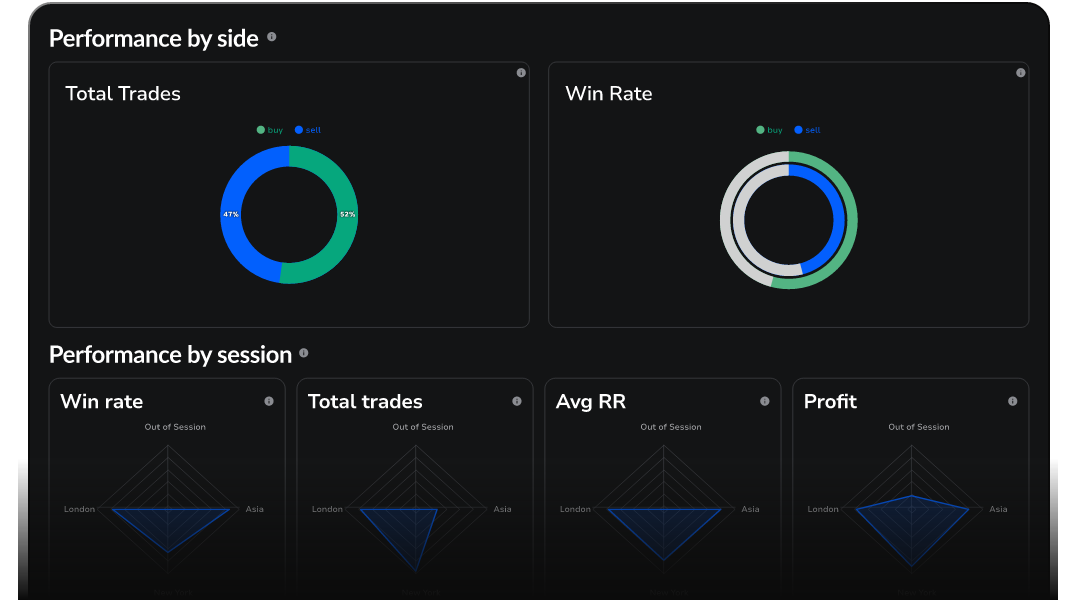
Emotional control is one of the most underestimated aspects of trading.
Journaling helps identify psychological patterns such as:
By tracking emotional responses, traders can systematically improve decision-making under pressure.
Over time, your journal evolves into a personalized database of:
This becomes your competitive advantage; far more valuable than copying external strategies.
A simple framework is enough to begin:
Before the trade
During the trade
After the trade
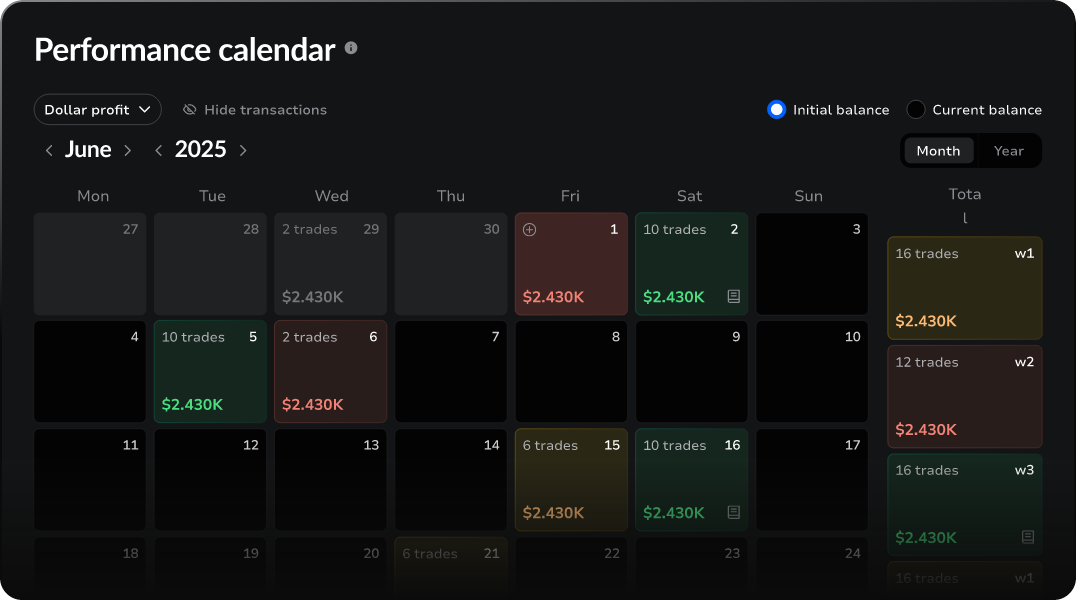
The most effective traders combine:
With FX Replay, you can:
This combination is what enables traders to gain years of experience in a fraction of the time.
Journaling is not optional for traders who want to improve efficiently.
It transforms:
Most traders avoid journaling because it requires effort and honesty.
That is precisely why it works. Try FX Replay's Live Journal free in-app now.
¿No ha encontrado aquí su pregunta?
Consulte nuestro Centro de ayuda.
A trading journal is a tool used to record and analyze trades, including entries, exits, reasoning, and emotions, to improve performance over time.
Journaling helps traders identify patterns, reduce mistakes, improve discipline, and accelerate learning through structured feedback.
It provides data-driven insights into behavior and strategy, allowing traders to refine decisions and eliminate recurring errors.
Ideally, every trade should be recorded and reviewed to maintain consistency and maximize learning.
Platforms like FX Replay allow traders to replay markets, backtest strategies, and journal trades in one place for faster improvement.
.png)
A practical guide to backtesting trading strategies step by step. Learn how to define rules, analyze performance, avoid common mistakes, and build a process that holds up before risking capital.


