.png)
Desde fuera, el mundo del trading parece apasionante. Pero vivirlo es algo muy diferente.
Los mercados en tiempo real son estresantes, costosos e implacables. Los errores se acumulan rápidamente, las emociones afloran enseguida y unas pocas decisiones erróneas pueden echar por tierra semanas de progreso o una cuenta entera.
Por eso, casi todos trader la misma pregunta inicial:
¿Empiezo practicando en un simulador o me lanzo directamente a los mercados reales?
Sobre el papel, los simuladores parecen perfectos.
No hay dinero real en juego. No hay daños permanentes. Solo es para practicar.
Pero eso plantea una duda de fondo: si no hay riesgo, ¿el aprendizaje es auténtico?
La respuesta no es un simple sí o no.
Un simulador de trading puede ser una de las herramientas más poderosas para el desarrollo trader, o una completa pérdida de tiempo.
La diferencia radica en cómo se utiliza, para qué está pensado y qué esperas de él.
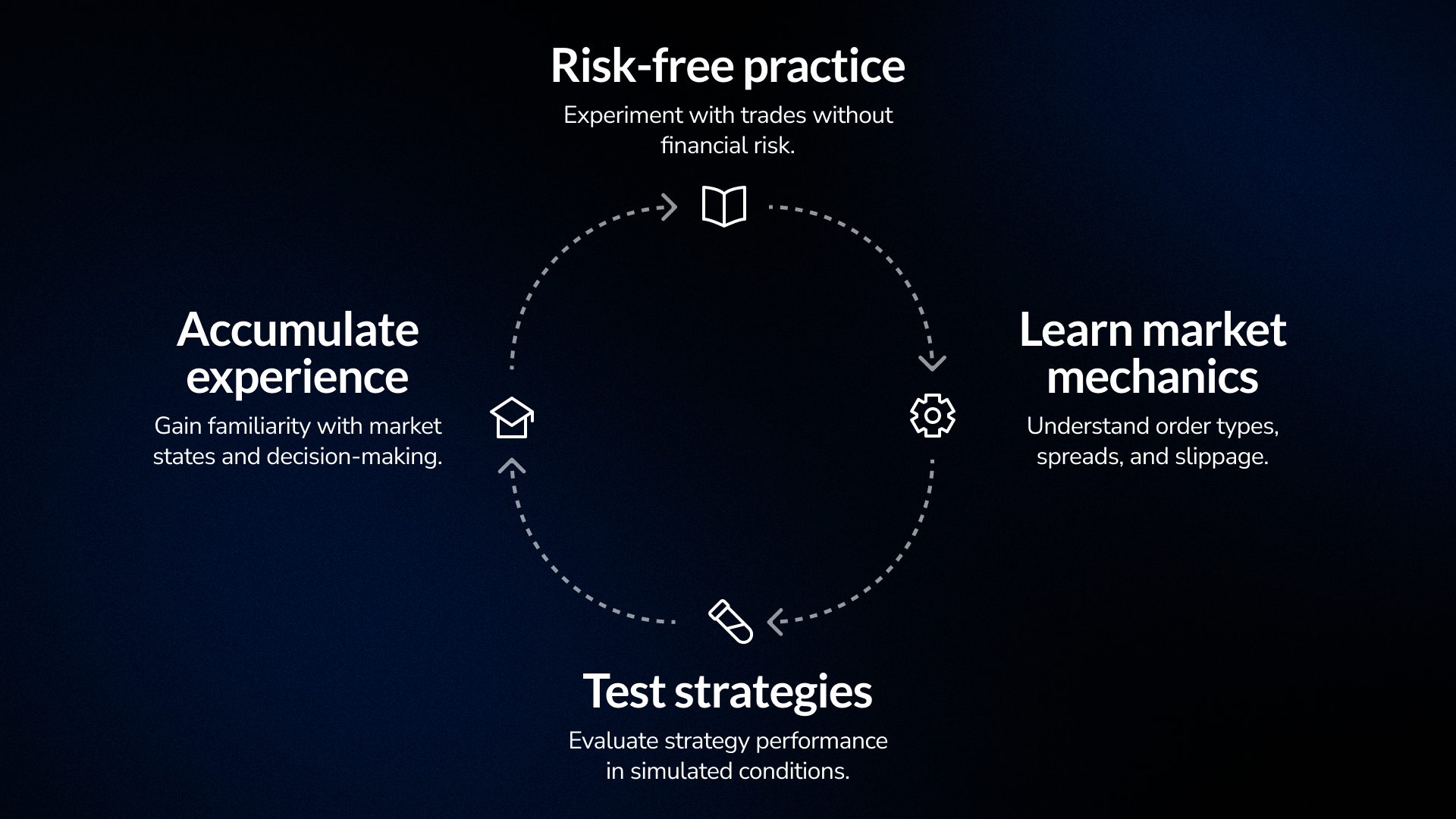
Un simulador de trading es un entorno de práctica que te permite realizar operaciones virtuales utilizando capital simulado, mientras que la evolución de los precios se basa en datos de mercado reales o históricos.
No todos los simuladores son iguales. Las herramientas básicas se limitan a reflejar los precios en tiempo real, mientras que las plataformas más avanzadas permiten a traders el historial de los mercados vela a vela, controlar la velocidad de ejecución y revisar las decisiones en su contexto.
Plataformas como FX Replay entran en esta última categoría, en la que la simulación no se centra tanto en el «trading simulado» como en el desarrollo estructurado de habilidades a través de la repetición, la revisión y los datos.
En un simulador, traders :
La diferencia fundamental es que los resultados no afectan a una cuenta real.
Existen simuladores en todos los mercados: acciones, divisas, futuros y criptomonedas. Pueden funcionar en tiempo real o mediante reproducciones de datos históricos. El formato importa menos que el objetivo.
Un simulador de trading está diseñado para:
No está diseñado para:
Operar en vivo implica demasiadas variables a la vez.
Y todo ello con el dinero en juego.
Los simuladores reducen esa carga cognitiva. Permiten traders nuevos traders en comprender cómo se mueven los mercados y cómo se desarrollan las decisiones de negociación, al eliminar el riesgo financiero. Este margen de maniobra acelera el aprendizaje inicial y ayuda traders la mecánica del mercado antes de que las consecuencias sean reales.
Los simuladores permiten a traders a la obra de inmediato. Sin papeleo. Sin necesidad de aportar fondos. Sin miedo a perder toda la cuenta el primer día. Ese acceso inmediato hace que el aprendizaje resulte más accesible.
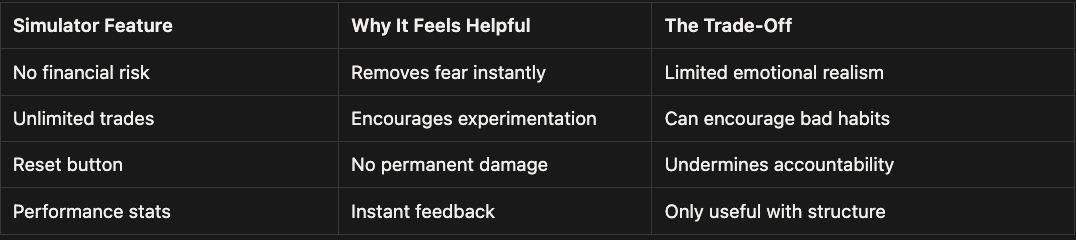
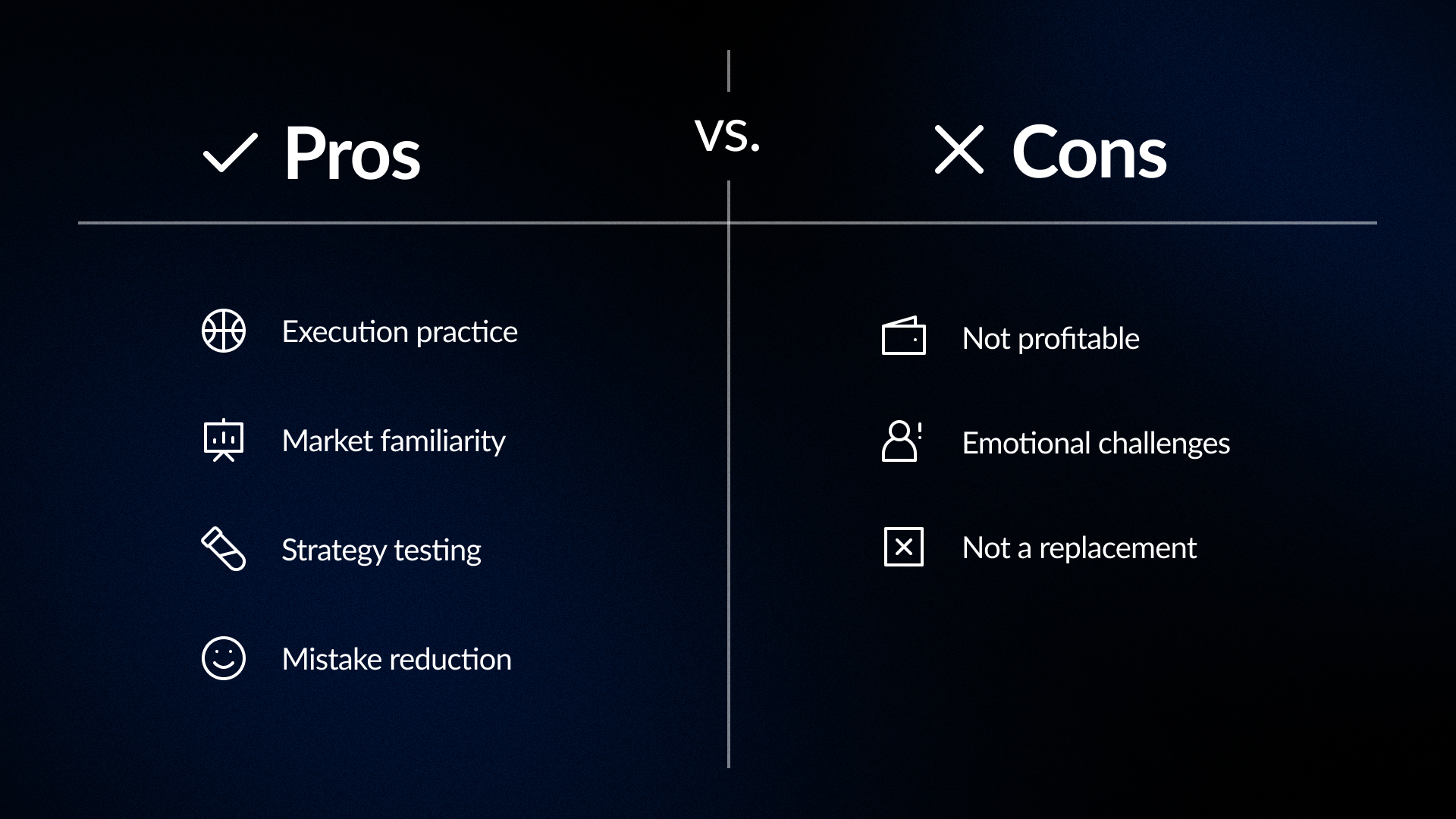
Cuando se utilizan de forma adecuada, los simuladores ofrecen varias ventajas reales.
Todos trader errores.
La diferencia radica en si esos errores suponen un gasto o sirven de aprendizaje.
Los simuladores permiten traders experimentar, observar los resultados y aprender sin sufrir pérdidas económicas. Esto resulta especialmente valioso al principio, cuando los errores son frecuentes y, a menudo, evitables.
Muchos traders por practicar el trading sin riesgo al principio, no para evitar pérdidas para siempre, sino para evitar pérdidas innecesarias.
Los simuladores son eficaces para aprender cómo funcionan realmente los mercados.
Este tipo de destreza mecánica reduce las dificultades posteriores. Traders comprenden cómo se comportan las operaciones una vez ejecutadas tienden a cometer menos errores evitables cuando pasan a operar en vivo.
Antes de arriesgar capital real, traders recurrir a la simulación para ver cómo se comporta realmente una estrategia.
La simulación permite responder a estas preguntas desde el principio, sobre todo cuando se combina con la reproducción estructurada y backtesting. Gracias a la reproducción, traders sumergirse directamente en condiciones de mercado específicas —volatilidad provocada por las noticias, sesiones con baja liquidez o situaciones conocidas— en lugar de esperar a que esos entornos se den en tiempo real. Así es como muchos usuarios de FX Replay abordan el entrenamiento deliberado.
La simulación condensa la experiencia. En lugar de esperar meses a que se den las condiciones adecuadas, traders reproducir sesiones históricas y practicar situaciones similares una y otra vez, familiarizándose así con los distintos estados del mercado: tendencias, rangos, cambios de volatilidad y transiciones.
La posibilidad de detener, rebobinar y volver a ejecutar la misma secuencia facilita la comprensión
por qué fracasó una decisión, y no solo que fracasó.
Cuando se analizan directamente en el gráfico las ejecuciones, los stops y los objetivos, el aprendizaje resulta más rápido, más claro y más práctico.
Aunque los simuladores ofrecen claras ventajas, también tienen limitaciones reales que traders comprender.
La mayor limitación es el realismo emocional.
Cuando no hay dinero en juego, las decisiones se perciben de otra manera. Las pérdidas son más fáciles de aceptar. Las reglas son más fáciles de incumplir. La confianza puede crecer demasiado rápido.
Una estrategia que parece sencilla en un entorno de simulación puede resultar incómoda cuando hay capital en juego. Esta diferencia emocional sorprende a muchos traders.
Los simuladores no deben considerarse un sustituto emocional del trading real. Sirven para practicar la ejecución de operaciones, pero no reproducen a la perfección la presión que se siente en la práctica.
No todos los simuladores representan la ejecución de la misma manera.
Los mercados en tiempo real incluyen:
Algunos simuladores simplifican estos factores. Esto significa que los resultados no son totalmente extrapolables.
Una serie de operaciones simuladas con resultados positivos puede llevar a traders a creer traders «listos», incluso cuando esos resultados se deban a condiciones favorables o a criterios poco rigurosos.
Este es uno de los errores más comunes relacionados con los simuladores.
Los simuladores suelen fallar traders cómo se utilizan, no por lo que son.
Entre los errores más comunes se encuentran:
Consejo de experto: si tu estrategia en el simulador no funcionaría con dinero real, es que te está enseñando a tomar decisiones equivocadas.
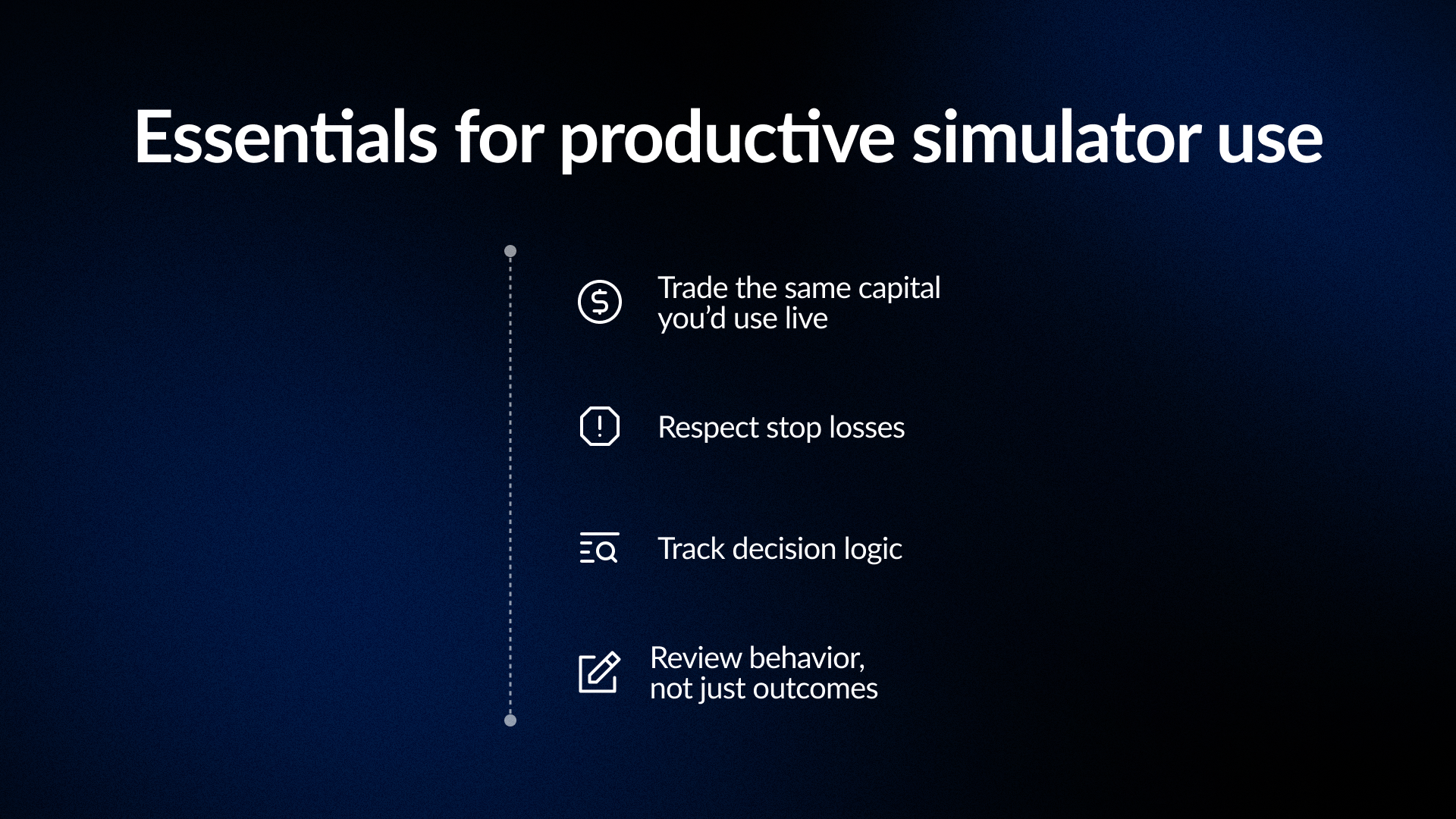
La estructura es más importante que las herramientas.
Para sacar el máximo partido al simulador, lo primero es:
Y lo más importante: repasar.
Llevar un diario es fundamental para lograr una mejora significativa. En FX Replay, las operaciones se registran automáticamente dentro del propio simulador, lo que permite traders revisar las ejecuciones directamente en el gráfico, etiquetar las decisiones, filtrar por tipo de configuración o de error, y vincular las notas emocionales a la evolución real de los precios, en lugar de a cifras aisladas.
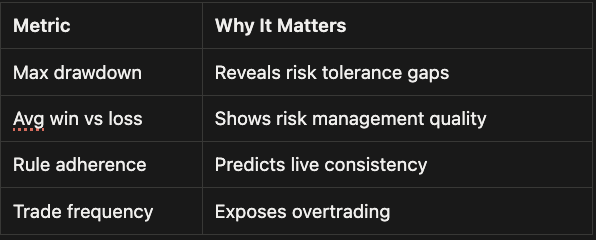
Las ganancias por sí solas son un indicador poco fiable en las primeras etapas. Una evaluación más significativa se centra en la coherencia en la ejecución, las caídas, el control del riesgo y el cumplimiento de las normas.
Los simuladores avanzados, como FX Replay, facilitan esta tarea al combinar la reproducción de operaciones con el análisis del rendimiento —realizando un seguimiento de las caídas, la esperanza matemática y las estadísticas temporales—, de modo que traders evaluar la consistencia en lugar de basarse únicamente en unas pocas operaciones acertadas.
Las métricas solo cobran sentido cuando el comportamiento se estabiliza. Por eso, muchos traders la simulación con backtesting estructurado, lo que les permite distinguir la calidad de la estrategia de los errores de ejecución.
Vale la pena utilizar un simulador si quieres:
No vale la pena utilizarlo si:
Los simuladores son herramientas de formación, no sustitutos de la ejecución real.
La transición al trading en vivo es cuando te enfrentas a la realidad.
Incluso traders de simulador más disciplinados traders que las emociones se intensifican cuando hay capital real en juego. Es algo normal.
La transición más saludable es la gradual:
Muchos traders utilizando simuladores junto con el trading en vivo para probar ajustes, ensayar situaciones o prepararse para entornos estructurados, como las evaluaciones de las empresas de trading por cuenta propia.
La mayoría de los simuladores de trading se centran en realizar operaciones en el momento presente. Aunque eso ayuda a dominar los aspectos básicos, limita la práctica deliberada.
FX Replay adopta un enfoque diferente. En lugar de basarse en una exposición aleatoria al mercado, permite traders años de comportamiento del mercado en sesiones de formación específicas. Traders poner a prueba sus ideas en distintos entornos, ensayar condiciones difíciles una y otra vez y revisar sus decisiones con todo el contexto histórico, convirtiendo la simulación en una práctica deliberada en lugar de un simple trading simulado pasivo.
Basado en la reproducción, vela a vela, de mercados históricos reales, FX Replay permite traders aislar situaciones concretas —sesiones volátiles, mercados tranquilos o configuraciones recurrentes— y practicar con ellas una y otra vez.
La reproducción, la ejecución, backtesting y el registro de operaciones se integran en un único flujo de trabajo, por lo que las operaciones se revisan en su contexto, en lugar de como estadísticas aisladas.
Por eso muchos traders FX Replay no solo como simulador, sino como un entorno de formación estructurado.
Consejo de experto: si no puedes explicar por qué una operación salió mal al revisarla, el error se repetirá en tiempo real.
Un simulador de trading vale la pena si entiendes lo que es y lo que no es.
Un simulador de trading no te hará obtener beneficios. No eliminará las emociones. No te garantizará el éxito.
Lo que puede hacer es:
Para traders desean aprender de forma adecuada, la simulación constituye una parte valiosa del proceso.
¿No ha encontrado aquí su pregunta?
Consulte nuestro Centro de ayuda.
Sí, siempre que se utilice para aprender los fundamentos, la ejecución y la disciplina, en lugar de para perseguir beneficios.
No. Te prepara para operar en condiciones reales, pero no reproduce del todo la presión emocional.
Hasta que seas capaz de seguir las reglas de forma sistemática y gestionar las pérdidas sin reaccionar de forma emocional.
Un exceso de confianza basado en resultados que no se ven respaldados por una ejecución rigurosa.
Sí. Muchos los utilizan para poner a prueba ideas y perfeccionar su ejecución sin correr ningún riesgo.
.png)
Una guía práctica para utilizar un simulador de operaciones con futuros. Descubre cómo el realismo en la ejecución, la práctica estructurada y el entrenamiento basado en la reproducción de operaciones ayudan a traders sus habilidades antes de arriesgar capital.